01
Vertigo & Balance Care
Protocol-based vestibular evaluation and treatment - including BPPV manoeuvres, Menieres care, and vestibular rehabilitation.

Niraaya Hospital
ENT Care | Gandhinagar
Beyond routine ENT consultations, Niraaya Hospital offers a set of dedicated specialised services that address complex or under-served clinical needs in Gandhinagar and Ahmedabad - delivered with the depth and precision of a tertiary referral centre, within the accessibility of a clinic near PDPU crossroad, Kudasan.

Vertigo | Hearing | Piercing
Overview
Beyond routine ENT consultations, Niraaya Hospital offers a set of dedicated specialised services that address complex or under-served clinical needs in Gandhinagar and Ahmedabad - delivered with the depth and precision of a tertiary referral centre, within the accessibility of a clinic near PDPU crossroad, Kudasan.
These three specialised services are provided by Dr. Khushali Patel (MBBS, MS ENT) with a level of clinical focus that goes beyond a general ENT appointment: a comprehensive, protocol-based vestibular evaluation and vertigo treatment programme; a structured hearing assessment and rehabilitation service covering the full audiological spectrum from screening to cochlear implant candidacy; and safe, medically supervised ear piercing for all age groups.
`json
{
"@context": "https://schema.org",
"@type": "MedicalProcedure",
"name": "Tympanoplasty",
"procedureType": "Surgical",
"bodyLocation": "Ear",
"description": "Surgical repair of a perforated eardrum",
"performer": {
"@type": "Physician",
"name": "Dr. Khushali Patel",
"medicalSpecialty": "Otolaryngology"
},
"availableService": {
"@type": "Hospital",
"name": "Niraaya Hospital",
"address": {
"@type": "PostalAddress",
"addressLocality": "Gandhinagar",
"addressRegion": "Gujarat"
}
}
}`
`json
{
"@context": "https://schema.org",
"@type": "FAQPage",
"mainEntity": [
{
"@type": "Question",
"name": "PASTE QUESTION HERE",
"acceptedAnswer": {
"@type": "Answer",
"text": "PASTE ANSWER HERE"
}
}
]
}`
*Dr. Neel Patel service pages (Part B) to be provided as next document*
*Content by TechDr Digital | techdr.in*
Specialised Care
01
Protocol-based vestibular evaluation and treatment - including BPPV manoeuvres, Menieres care, and vestibular rehabilitation.
Specialised Care
Vertigo is not simply dizziness - and this distinction matters, because the two are managed very differently. Dizziness is a broad term encompassing lightheadedness, faintness, or unsteadiness. Vertigo is specific: it is the illusion of movement - the false, often violent sensation that you or the world around you is spinning, tilting, or rocking - when no actual movement is occurring.
Vertigo is almost always ear-related (peripheral vestibular disorder) in origin - arising from disruption of the vestibular system, housed within the inner ear. The vestibular system consists of three semicircular canals (detecting rotational head movement) and two otolith organs - the utricle and saccule - (detecting linear acceleration and head position relative to gravity). When this system malfunctions, the brain receives conflicting signals from the ear and the eyes, generating the sensation of movement. The majority of vertigo cases are benign, highly treatable, and respond excellently to targeted management.
BPPV is the single most common cause of vertigo - responsible for approximately 20% of all dizziness presentations and over 50% of all peripheral vertigo cases. It occurs when otoconia - tiny calcium carbonate microcrystals embedded in a gelatinous membrane on the sensory receptor of the utricle - become dislodged and migrate into one of the three semicircular canals. When the head moves in the plane of the affected canal, the free-floating otoconia deflect the cupula (the mechanosensory receptor at the end of each canal) and generate a false signal of rotation, causing a brief but intensely distressing episode of vertigo.
Classic BPPV presents as sudden, brief (typically less than 1 minute, often 15-30 seconds), intensely spinning vertigo triggered by specific head position changes: rolling over in bed, lying down from sitting, sitting up from lying, looking up to a high shelf, bending forward to pick something up, or extending the neck. Between episodes, the patient may feel mildly unsteady but is generally symptom-free.
Diagnostic tests: The Dix-Hallpike test (for posterior semicircular canal BPPV - the most common) and the Supine Roll test (for lateral semicircular canal BPPV) are performed in the clinic. A characteristic fatigable rotatory nystagmus (involuntary oscillation of the eyes) is observed during the provoking position, confirming the diagnosis.
Treatment: The Epley Canalith Repositioning Manoeuvre is the definitive treatment for posterior canal BPPV. It is a specific sequence of four head and body positions held for 30 seconds each, designed to guide the displaced otoconia out of the semicircular canal and back into the utricle where they can no longer cause symptoms. Performed in the clinic by Dr. Patel, the Epley manoeuvre resolves BPPV completely in approximately 80-90% of patients in a single treatment session. A Semont (liberatory) manoeuvre or the BBQ Roll (360 horizontal rotation manoeuvre) is used for lateral canal BPPV. Home exercises (Brandt-Daroff exercises) are prescribed for maintenance and to reduce recurrence risk.
Meniere's disease (endolymphatic hydrops) is a chronic, fluctuating disorder of the inner ear caused by abnormal accumulation and pressure of endolymph - the fluid filling the membranous labyrinth of the cochlea and vestibular organs. The exact aetiology remains incompletely understood but involves a combination of genetic predisposition, immune mechanisms, viral triggers, and possibly allergy.
The disease produces characteristic, episodic "crises" or "attacks" comprising all four of the following: episodic rotatory vertigo lasting 20 minutes to several hours (rarely more than 12 hours); fluctuating low-frequency sensorineural hearing loss (typically worst during an attack and often partially recovering between attacks in the early stages); tinnitus (usually a low-pitched roaring, humming, or rumbling sound in the affected ear); and aural fullness (a sensation of pressure or blockage in the ear, typically preceding or accompanying an attack). Over time, across multiple attacks over months to years, both the hearing loss and tinnitus become progressive and permanent.
- *Intratympanic corticosteroids:* Steroid solution injected through the eardrum into the middle ear, diffusing into the inner ear; effective for vertigo control in many patients while preserving hearing
- *Intratympanic gentamicin:* A targeted, low-dose aminoglycoside antibiotic injected into the middle ear; selectively ablates the vestibular end organ of the affected ear, eliminating vertigo in 70-85% of patients, at the cost of some residual hearing in that ear (used in patients with poor serviceable hearing in the affected ear)
Vestibular neuritis is an acute vestibular syndrome caused by viral or post-viral inflammation of the superior vestibular nerve (the main branch of the vestibular nerve innervating the horizontal and anterior semicircular canals and the utricle). Patients present with sudden, severe, continuous rotatory vertigo - typically lasting days, not seconds or hours - accompanied by intense nausea, vomiting, and marked unsteadiness, but crucially without hearing loss.
Labyrinthitis is similar but additionally involves the cochlea - the labyrinthitis patient therefore also has hearing loss in the affected ear alongside the vertigo episode.
Both conditions are thought to be caused by reactivation of latent herpes simplex or varicella-zoster virus in the vestibular ganglion, analogous to Bell's palsy for the facial nerve.
Management: High-dose oral corticosteroids (prednisolone) begun within the first 72 hours may improve final vestibular nerve function recovery. Short-term vestibular suppressants reduce acute nausea. Critically - early vestibular rehabilitation therapy (VRT) is the most important intervention for accelerating central compensation and restoring balance - the brain must be challenged, not sedated, to adapt to the vestibular asymmetry.
Specialised Care
Hearing loss is the third most prevalent chronic physical condition in India - after hypertension and arthritis. Yet millions live with significant hearing loss for years before seeking help, often attributing progressive difficulty hearing to normal ageing, or adapting by asking people to repeat themselves, turning up television volume, and gradually withdrawing from social situations. The consequences of untreated hearing loss extend well beyond communication: they include social isolation, cognitive decline (hearing loss is now recognised as a significant modifiable risk factor for dementia), depression, and reduced quality of life.
At Niraaya Hospital, Gandhinagar, we provide a complete, structured hearing evaluation programme - not merely a basic audiogram - tailored to the age, clinical presentation, and specific needs of each patient from Gandhinagar, Ahmedabad, and surrounding Gujarat.
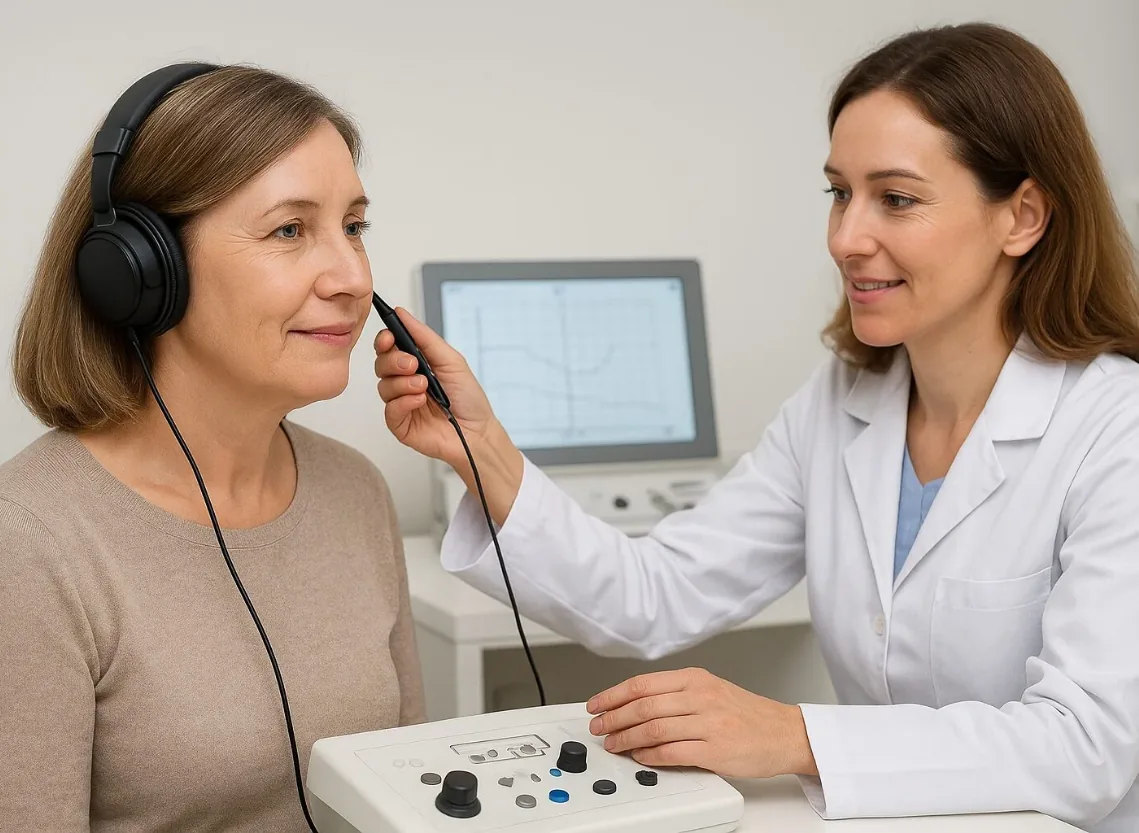
The gold-standard subjective hearing test. Using calibrated headphones and bone conduction headband in a sound-treated environment, the audiologist presents tones of different frequencies (from 250 Hz to 8000 Hz) at varying intensities. The patient responds to indicate whether each tone is heard. The resulting audiogram maps the hearing threshold at each frequency - the softest level at which sound is audible - and classifies hearing as normal, mild (26-40 dB), moderate (41-60 dB), moderately severe (61-80 dB), severe (81-90 dB), or profound (greater than 90 dB) loss. The pattern of the audiogram helps classify the type (conductive, sensorineural, or mixed) and aetiology of hearing loss.
An objective test of middle ear function that does not require any active response from the patient. A probe placed in the ear canal delivers a tone and simultaneously varies the air pressure in the sealed canal, measuring the compliance (mobility) of the eardrum. A normal (Type A) tympanogram indicates a mobile eardrum and normally functioning middle ear. A flat (Type B) tympanogram indicates middle ear fluid (glue ear) or a perforation. A shallow peaked tympanogram (Type As) suggests ossicular chain stiffness (as in otosclerosis). Tympanometry is invaluable in children and in patients who cannot undergo standard behavioural hearing tests.
Goes beyond pure tones - assessing how well the patient understands and discriminates spoken words at different volume levels. Speech recognition threshold (SRT) is the intensity at which 50% of spondaic words (two-syllable words with equal stress) are correctly identified. Speech discrimination score (SDS) is the percentage of phonetically balanced single-syllable words correctly identified at a comfortable listening level. Poor speech discrimination (below 70%) indicates cochlear or retrocochlear pathology and is critical in determining hearing aid benefit and cochlear implant candidacy.
An entirely objective electrophysiological hearing test measuring the brain's electrical response to click sounds, recorded via electrodes on the scalp. BERA does not require any response from the patient - making it the investigation of choice for: universal newborn hearing screening; hearing assessment in infants, young children, and patients with developmental disabilities who cannot perform behavioural audiometry; suspected auditory neuropathy spectrum disorder (ANSD - where the cochlea functions normally but the auditory nerve has abnormal synchrony); and diagnosis of vestibular schwannoma (acoustic neuroma - an asymmetric prolongation of the interpeak intervals on BERA is a characteristic finding).
A rapid, objective screening test of outer hair cell function within the cochlea. The outer hair cells amplify incoming sound vibrations - a by-product of this amplification is a tiny sound emitted back from the cochlea, detectable with a sensitive microphone probe in the ear canal. A "pass" result indicates the outer hair cells are functioning and cochlear hearing is likely normal in the screened frequency range. A "refer" result prompts further BERA testing. OAE is the primary tool for universal newborn hearing screening programmes.
Medical Management: Sudden sensorineural hearing loss (treated urgently with systemic and/or intratympanic steroids); autoimmune hearing loss (oral steroids and immunosuppression); otitis media with effusion (nasal treatment, decongestants, and ventilation tube insertion for refractory cases).
Surgical Rehabilitation: Conductive hearing loss caused by eardrum perforation (tympanoplasty), ossicular chain disruption (ossiculoplasty), or otosclerosis (stapedotomy) can be significantly improved or restored with surgery - providing hearing rehabilitation without the need for a device.
Hearing Aid Counselling: For patients with sensorineural hearing loss not amenable to surgery, modern digital hearing aids are the most accessible and effective intervention. Dr. Patel provides audiological counselling and referral to certified hearing aid dispensers for: BTE (behind-the-ear), RIC/RITE (receiver-in-canal), and ITE (in-the-ear) custom hearing aids. Aid selection is personalised based on degree and configuration of hearing loss, ear anatomy, lifestyle requirements, and budget. Bilateral fitting (two aids) is recommended wherever bilateral loss is present.
Cochlear Implant Candidacy Evaluation: For patients with severe-to-profound bilateral sensorineural hearing loss who receive minimal benefit from optimally fitted hearing aids - including children with congenital hearing loss - cochlear implantation offers transformative auditory rehabilitation. Dr. Patel provides candidacy evaluation (audiological criteria, CT and MRI cochlear imaging, speech and language assessment) and coordinates referral to cochlear implant surgical centres in Ahmedabad and beyond.
Specialised Care
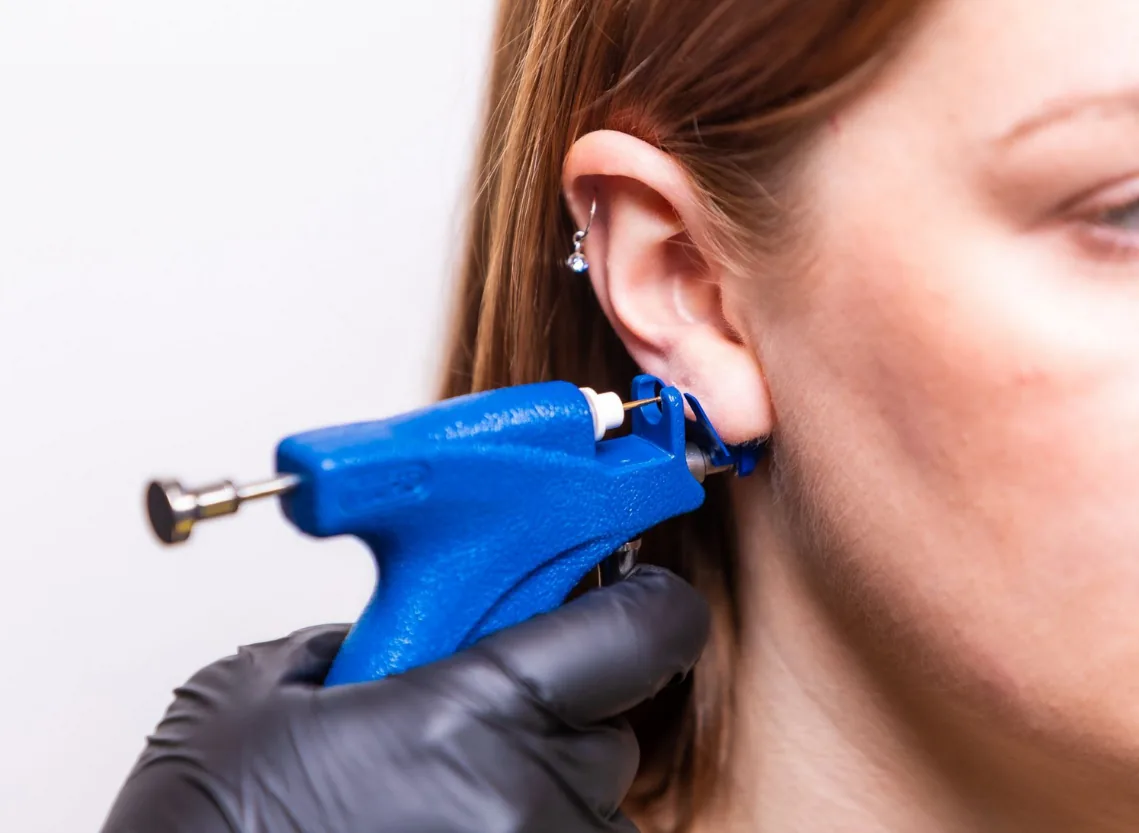
Safe, sterile, medically supervised ear piercing for all age groups is available at Niraaya Hospital, Gandhinagar. All piercings are performed by trained clinical staff using single-use, sterile needle-based piercing technique (never a stud gun) and hypoallergenic implant-grade titanium or surgical steel starter earrings appropriate for freshly pierced ears.
Ear piercing at Niraaya Hospital is specifically recommended for:
Post-piercing aftercare instructions are provided in writing at the time of the procedure.

Your Specialist
MBBS, MS ENT | ENT & Head-Neck Surgeon
At Niraaya Hospital, Kudasan, Gandhinagar, Dr. Khushali Patel provides comprehensive diagnosis and treatment across medical and surgical ENT care for patients from Gandhinagar, Ahmedabad, and across Central and North Gujarat.
Common Questions
The Epley canalith repositioning manoeuvre is a specific sequence of four head and body positions, each held for 30 seconds, designed to guide dislodged inner ear crystals (in BPPV) out of the affected semicircular canal and back into the utricle where they no longer cause symptoms. It is performed by Dr. Patel in the clinic and takes approximately 10-15 minutes. It is entirely non-invasive, painless, and resolves BPPV in 80-90% of patients in a single session - often within minutes of completing the manoeuvre.
Ear-origin (peripheral) vertigo is characterised by brief, intense spinning triggered by head movements (BPPV), or episodic vertigo accompanied by ear symptoms - hearing change, tinnitus, ear fullness (Meniere's). Central vertigo - from the brain or cerebellum - tends to be continuous, is often associated with neurological symptoms (diplopia, dysarthria, dysphagia, facial numbness, limb weakness, or ataxia), and is not typically position-triggered. Dr. Patel performs a full vestibular assessment - including provocation tests and where needed VNG, VEMP, and MRI - to make this distinction accurately.
A standard evaluation including pure-tone audiometry and tympanometry takes 20-30 minutes. With speech audiometry included, approximately 40-50 minutes. BERA testing for an infant or young child takes 45-75 minutes. All assessments are conducted in a patient-paced, comfortable environment - particularly important for children.
Universal newborn hearing screening (using OAE) should ideally be performed before hospital discharge or within the first month of life. A "refer" result prompts diagnostic BERA by 3 months of age. If bilateral significant hearing loss is confirmed, the goal is hearing aid fitting by 4-6 months and cochlear implant evaluation by 12 months if aids provide insufficient benefit - the critical period for speech and language brain development.
Cochlear implant candidates include: children with severe-to-profound bilateral sensorineural hearing loss receiving limited benefit from hearing aids (the most important indication - early implantation in congenitally deaf children yields the best speech outcomes); post-lingual adults with severe-to-profound bilateral SNHL where even optimally fitted hearing aids provide insufficient speech understanding (word recognition scores below 50% in the better-aided ear); and selected patients with asymmetric hearing loss meeting candidacy criteria. CT and MRI of the cochlea, full audiological battery, and speech/language assessment are performed for candidacy evaluation.
Yes. Niraaya Hospital offers safe, medically supervised ear piercing for infants from approximately 3 months of age onward, using sterile single-use needle technique, implant-grade titanium flat-back labret-style starter earrings (chosen to minimise snagging and choking risk), and a sterile field. Written aftercare instructions are provided. The procedure is performed gently and quickly to minimise discomfort.
Meniere's disease cannot be permanently cured in all patients, but its symptoms - particularly the disabling vertigo attacks - can be substantially controlled. A low-sodium diet, betahistine, and diuretics reduce attack frequency in the majority of patients. For those with refractory, disabling vertigo despite medical management, intratympanic gentamicin ablation controls vertigo in 70-85% of cases. Surgical options (endolymphatic sac decompression, vestibular nerve section) exist for selected refractory cases.
Niraaya Hospital, near PDPU Crossroad, Kudasan, Gandhinagar - accessible from Ahmedabad in 30-40 minutes - provides comprehensive audiological services: PTA, tympanometry, speech audiometry, BERA, and OAE, conducted and interpreted by Dr. Khushali Patel (MS ENT). Hearing aid counselling and cochlear implant candidacy evaluation and referral are also available. Patients from Gandhinagar, Ahmedabad, and surrounding Gujarat districts are welcome. Call 9979913366 to book your appointment.
Appointments
Morning 9:00 AM - 1:00 PM | Evening 5:00 PM - 8:00 PM
Appointments
Share your details and our care team will confirm your visit shortly.
Thank you. Our team will contact you shortly to confirm your appointment.
Your information is kept private and used only to schedule your visit.
Mon-Sat | Morning 9 AM - 1 PM | Evening 5 - 8 PM