01
Liver Cyst
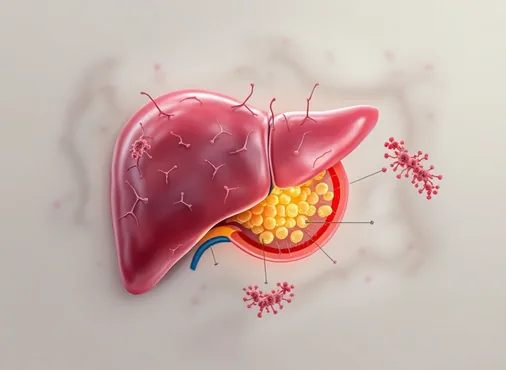
A liver cyst is a fluid-filled cavity within the liver parenchyma. The vast majority of liver cysts are simple benign cysts - thin-walled, unilocular (single cavity), containing clear serous fluid, and carrying no malignant potential. They are discovered incidentally - often on an ultrasound performed for another indication - and in most cases require no treatment whatsoever.
Simple liver cysts: Present in approximately 5% of the population. Most are asymptomatic. When large (above 5-8 cm), they can cause: right upper quadrant or epigastric discomfort or a dull ache, early satiety from compression of the stomach, a palpable right upper abdominal mass, and rarely, complications - intracystic haemorrhage (causing acute pain), infection, or rupture. Symptomatic simple cysts are treated with laparoscopic de-roofing (fenestration) - the cyst dome is excised and the cavity is marsupialized into the peritoneal cavity, allowing permanent drainage. This is a highly effective day-care or one-night laparoscopic procedure.
Polycystic liver disease: An inherited condition (autosomal dominant, often associated with polycystic kidney disease) characterised by multiple, bilateral liver cysts - sometimes replacing large volumes of liver parenchyma, causing massive hepatomegaly and significant symptoms. Management is complex, ranging from laparoscopic cyst fenestration (deroofing multiple cysts) for selected cases to liver transplantation for the most severe, symptomatic cases. Dr. Patel provides surgical assessment and management for polycystic liver disease in collaboration with hepatologists.
Hydatid cyst: Caused by infection with Echinococcus granulosus (a tapeworm transmitted via dogs and sheep - more common in rural agricultural areas of Gujarat and India). Hydatid cysts have a characteristic appearance on ultrasound and CT (daughter cysts within the mother cyst, calcified rim). Unlike simple cysts, hydatid cysts carry infection risk and should not be punctured without specific precautions. Management includes pre-operative albendazole (to reduce cyst viability and risk of spillage), followed by PAIR (Percutaneous Aspiration, Injection, Re-aspiration) for uncomplicated cysts or laparoscopic/open surgical resection (cystectomy or pericystectomy) for complex or large cysts.