

01
Splenic Cyst
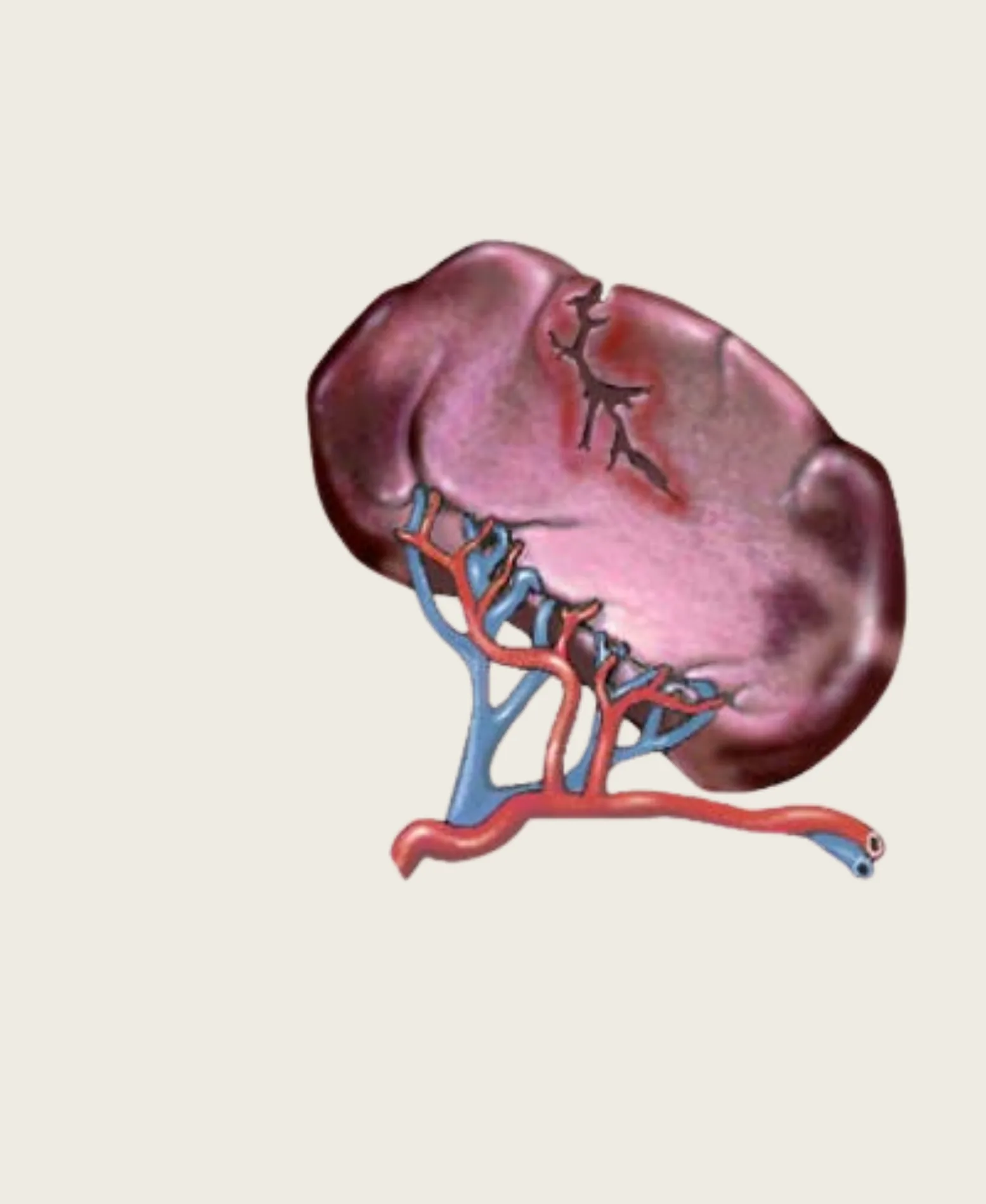
Splenic cysts are fluid-filled lesions within the spleen - classified as primary (true cysts, with an epithelial lining - either congenital or post-infectious epidermoid cysts) or secondary (pseudocysts, without a true epithelial lining - the most common type, resulting from previous trauma causing intrasplenic haemorrhage that subsequently liquefies).
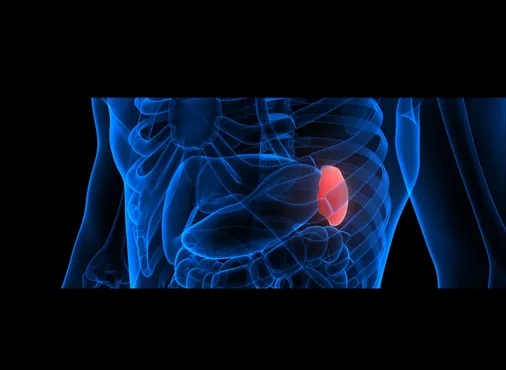
Most splenic cysts are small (less than 5 cm), asymptomatic, and discovered incidentally on ultrasound or CT. Small cysts require only surveillance. Large cysts (above 5 cm) can cause left upper quadrant or left shoulder tip pain (referred from the diaphragm), early satiety from stomach compression, and rarely, complications including rupture or haemorrhage.
Treatment Approach
Management:
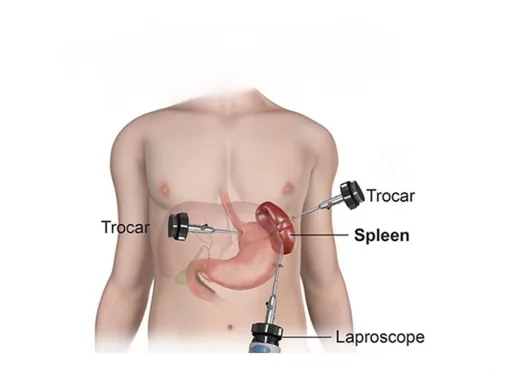
Large or symptomatic splenic cysts are managed with laparoscopic partial splenectomy (de-roofing / cyst excision) - removing the cyst while preserving as much normal spleen tissue as possible, thereby maintaining splenic immune function. Complete (total) laparoscopic splenectomy is reserved for cysts involving the entire spleen or those where partial excision is not technically feasible.