.webp)
.webp)
01
Gastrectomy - Surgical Treatment of Gastric Cancer
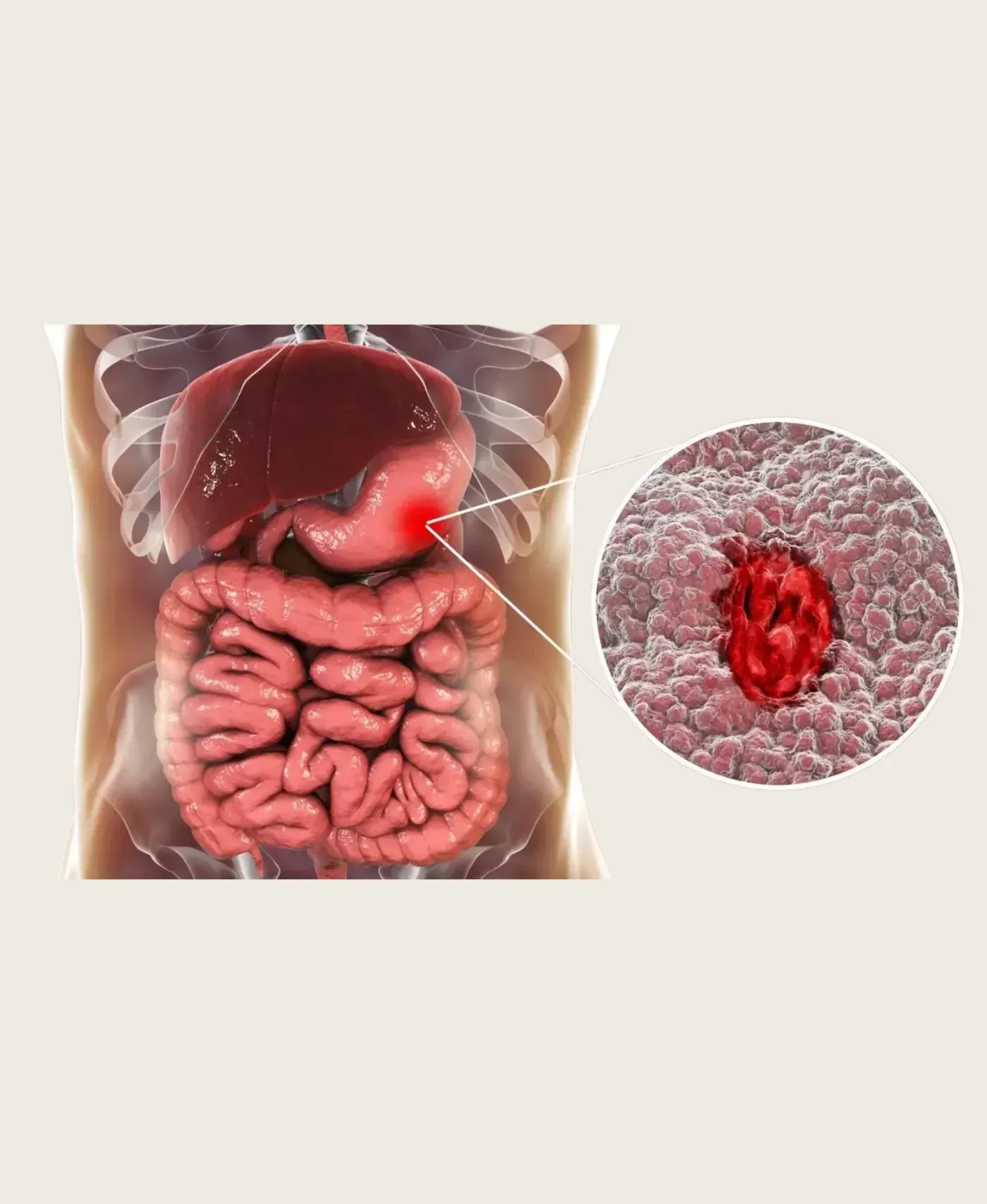
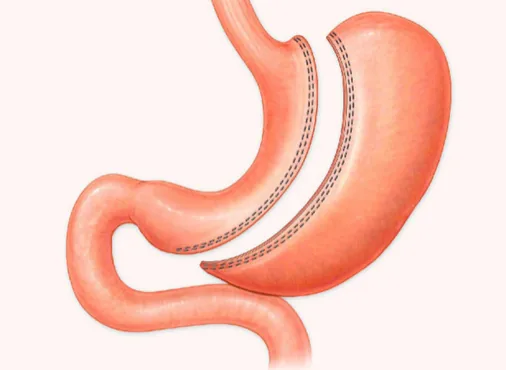
Gastrectomy is the surgical removal of part (partial / distal gastrectomy) or all (total gastrectomy) of the stomach for gastric adenocarcinoma. The extent of resection is determined by tumour location, TNM stage, and the principle of achieving R0 resection - a microscopically clear surgical margin - which is the single most important determinant of long-term oncological outcome.
Distal (Subtotal) Gastrectomy:
For tumours of the distal stomach (antrum and pylorus) - the lower two-thirds to three-quarters of the stomach are removed along with the first part of the duodenum, regional lymph nodes (D2 lymphadenectomy - the standard in India and East Asia), and the greater and lesser omentum. Bowel continuity is restored with a gastrojejunostomy (Billroth II) or Roux-en-Y reconstruction. The remaining stomach preserves a degree of normal gastric reservoir function.
Total Gastrectomy:
For proximal (gastric fundus and cardia) or diffuse (linitis plastica) cancers - the entire stomach is removed along with D2 lymph nodes and omentum. A Roux-en-Y oesophagojejunostomy restores continuity between the oesophagus and the jejunum. Patients require nutritional counselling and supplementation (particularly vitamin B12, iron, calcium, and fat-soluble vitamins) after total gastrectomy.
D2 Lymphadenectomy:
The standard for gastric cancer in Asia - systematic removal of both the perigastric lymph nodes (Level 1) and the nodes along the major feeding arteries (coeliac axis, left gastric, splenic, and common hepatic arteries - Level 2). D2 dissection has been shown to improve long-term survival compared to D1 (perigastric nodes only) dissection and is the oncological standard Dr. Patel employs.
Laparoscopic gastrectomy:
Dr. Patel performs laparoscopic distal gastrectomy with D2 dissection for resectable distal gastric cancer - achieving equivalent oncological outcomes to open gastrectomy (equivalent margin rates, lymph node harvest, and 5-year survival in multiple randomised controlled trials) with significantly less blood loss, faster recovery, shorter hospital stay, and earlier commencement of adjuvant chemotherapy.
Perioperative chemotherapy: Gastric cancer surgery is most commonly combined with perioperative chemotherapy (FLOT or FOLFOX regimen - given before and after surgery) for locally advanced resectable cancers - Dr. Patel coordinates chemotherapy scheduling with medical oncologists at referral centres to optimise the treatment pathway for each patient.